Getting Paid
Which Network Is Cheapest for Receiving Stablecoins? Ethereum, Tron, Base and Polygon Compared
By Robert H.
The same stablecoin can cost you eight dollars or eight cents to receive, depending on the network. Here is how the major networks compare, and how to pick the right one before you share your address.
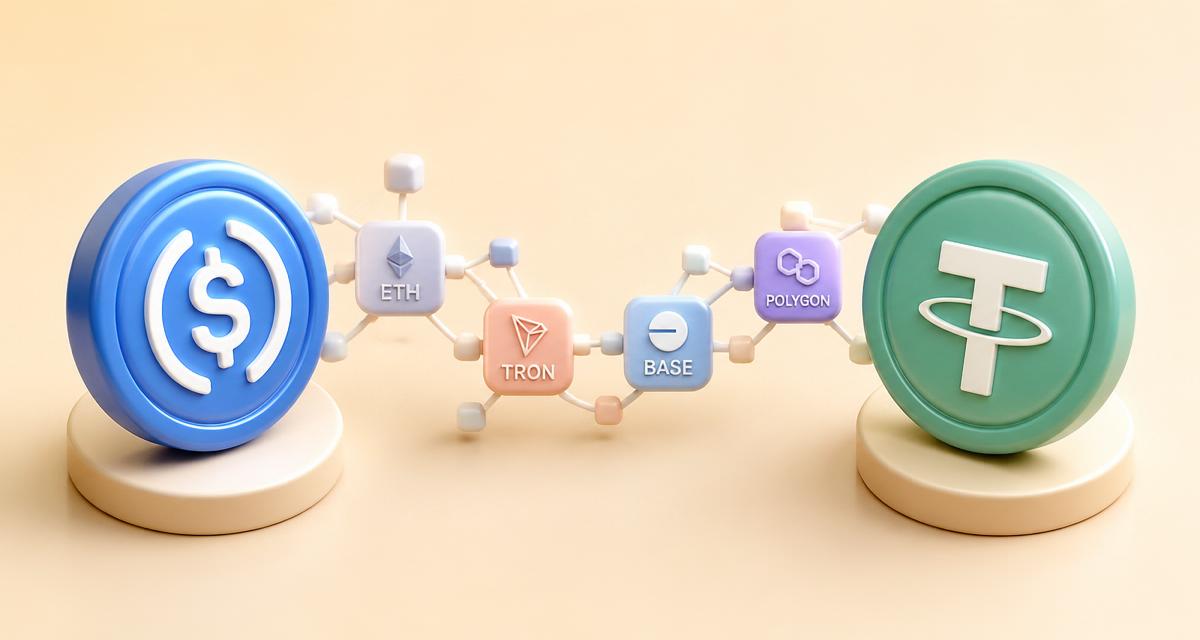
Most people think a stablecoin is a stablecoin. USDC is USDC, so what could vary? The answer is the network it travels on, and the difference is bigger than almost anyone expects. Receive 500 USDC on one network and the fee is a fraction of a cent. Receive the exact same 500 USDC on another and it can cost several dollars. If you get paid in stablecoins regularly, the network you choose directly affects how much of your money you actually keep.
Why does the same stablecoin exist on different networks?
A stablecoin like USDC or USDT is not tied to a single blockchain. The issuer deploys it on several networks at once, so the same coin can live on Ethereum, Tron, Base, Polygon and others. They all hold the same dollar value, but they run on completely different infrastructure, with different speeds and, crucially, different fees.
This is why the phrase "send me USDC" is incomplete. USDC on which network? Getting this agreement right with your client, before they send anything, is the single most important step. Send on the wrong network and, at best, you pay more than you needed to. At worst, if your wallet does not support that network, the payment can be difficult or impossible to recover.
How much does each network actually cost?
Fees change with network demand, so treat these as general ranges rather than fixed prices, but the pattern is consistent.
Ethereum is the original home of most stablecoins and the most secure, most widely supported network. It is also the most expensive. A single transfer can cost anywhere from a couple of dollars to well over ten when the network is busy. For large payments this is a rounding error, but for smaller invoices it stings.
Tron is heavily used for USDT specifically, and its appeal is low cost. Transfers usually cost around a dollar or less, which is why a huge share of USDT moves across Tron. If your clients pay in USDT, there is a good chance they already use it.
Base is a newer network built by Coinbase that runs on top of Ethereum. It offers Ethereum-level compatibility with fees that are usually a few cents. It has become a popular choice for USDC.
Polygon is another low-cost network, long established, with fees typically well under a cent. It is widely supported by wallets and exchanges and is a solid choice for everyday stablecoin payments.
The takeaway is simple. Ethereum buys you maximum security and support at a premium price. Tron, Base and Polygon buy you speed and very low fees. For most freelancers receiving regular payments, a low-cost network makes more sense than paying Ethereum fees on every invoice.
Is the cheapest network always the best?
Not necessarily. Cost is only one factor. Three others matter.
Compatibility comes first. The network only works if both your wallet and your client's wallet or exchange support it. A slightly higher fee on a network you both already use beats a cheaper network that causes a failed transfer.
Support comes second. Ethereum and Polygon are supported almost everywhere. Newer networks are catching up fast but are not yet universal. Check that your exchange supports the network before you plan to cash out there.
Security comes third. Ethereum is the most battle-tested network in existence. The lower-cost options are secure and widely trusted too, but if you are receiving a very large one-off payment, some people still prefer Ethereum's track record for that specific transfer.
How the network affects your bookkeeping
Whichever network you choose, every payment you receive on it is recorded on that blockchain against your address. That is good news for your admin, because it means a complete and verifiable trail exists for each incoming payment. The challenge is that if you receive payments across several networks, your history is now spread across several blockchains, each with its own explorer and its own raw data.
Pulling that together by hand is tedious. This is exactly what stbl admin handles for you. It reads your incoming stablecoin payments across the networks you use, converts each one to its euro value at the moment it arrived, and gives you a single clean overview regardless of which chain the money came in on. Instead of checking three different block explorers at year-end, you have one tidy record ready for your bookkeeper. If you want to see how receiving fits into the wider picture, our guide on receiving payments in stablecoins and crypto walks through the full flow.
So which network should you ask to be paid on?
Agree the network with your client before any payment is sent. For USDT, Tron is common and cheap. For USDC, Base and Polygon offer very low fees with wide support. Reserve Ethereum for cases where maximum security matters more than cost, or where your client insists on it. Confirm your own wallet and your chosen exchange both support the network, so you can receive and later cash out without friction.
Get the network choice right and you keep more of every payment while keeping your records clean. To see how the whole journey works from payment to bookkeeper-ready report, take a look at how stbl admin works.
This article is for general information and is not financial advice. Network fees and support change over time, so always confirm current details with your wallet and exchange before receiving a payment.
Bookkeeper-ready in minutes
Connect a wallet, match payments to invoices and export clean reports your bookkeeper can actually use.
Get started